There is room for a further repo rate cut, says Dr Andrew Golding
While a further reduction to the interest rate would have been a bonus for aspirant first-time home buyers and existing homeowners with mortgages, the Monetary Policy Committee’s decision to leave the repo rate unchanged at 3.5% was anticipated by the majority of market commentators, says Dr Andrew Golding, chief executive of the Pam Golding Property group.
Says Dr Golding: “Encouragingly, the residential property market has since June/July last year (2020) been buoyed by first-time and other home buyers seeking to capitalise on the record low interest rates coupled with value-for-money opportunities in the current economic environment – and further boosted by changing dynamics in the marketplace as buyers adjust their lifestyles and residential property preferences to suit the ‘new normal’ resulting from the pandemic.
“This increased activity is particularly evident in the lower price band below and just above R2 million, but is also fuelling sales up to approximately the R8 million mark and beyond. According to the latest Pam Golding Residential Property Index, there is a clear recovery in national house prices from a low of 2.36% in April 2019 to a high of 3.14% in December 2020. House price inflation averaged at 2.52% in 2019 and 2.80% in 2020. Significantly, there is a gradual recovery underway with house price inflation accelerating during the second half of 2020. The rebound in SA house prices, coupled with still muted consumer inflation, saw real house price inflation back in positive territory in December 2020. Notably, freehold property prices have outperformed relative to sectional title throughout the past year, averaging at 2.9% (FH) versus 2.1% (ST), according to Lightstone.
“As ooba points out, the volume of applications from first-time buyers in Q4 of 2020 increased by 36% compared to Q4 in 2019, with a 59% increase in value growth, while ooba’s overall home loan applications for Q4 2020 increased by 36% compared to Q4 2019, representing a 56% growth in value. Average house prices rose to R1.36 million in December last year, up 11.7% from year-earlier levels, while the average price for first-time buyers inched up to a record high of R1.104 million. That said, the metric for home loans extended to first-time buyers as a percentage of ooba’s total mortgage extended appears to have peaked, declining to 49.9% in December, from a record high of 56.2% in May.
“Even the top end of the market has shown some positive activity and signs of recovery, albeit dependent on realistic, market-related pricing by serious, motivated sellers. In recent months - including the December festive season – we have successfully concluded sales on the Cape’s Atlantic Seaboard at prices in excess of R30 million and even up to R70 million”.
Adds Dr Golding: “We believe that while the MPC erred on the side of caution in holding the repo rates steady, that there is certainly a compelling case for a further reduction, which would provide some relief to financially distressed households and businesses.
“Rather than cutting interest rates further, the Reserve Bank may opt instead to keep rates lower for longer, which would be facilitated by inflation remaining below the mid-point of the Reserve Bank’s 3%-6% inflation target.
“While the risks to economic growth are on the downside, the risks to inflation are on the upside, with food and oil prices trending higher in recent weeks. This is further complicated by increased volatility in the Rand, although potentially positive spinoffs from the Joe Biden US Presidential inauguration could offset this to some degree. The year ahead is likely to be characterised by ongoing levels of uncertainty, with economists saying there is still a possibility of further cuts in the repo rate as economic activity remains vulnerable to further waves of infection and lockdown restrictions. This will remain the case until such time as the vaccine roll-out gains momentum and South Africa approaches ‘herd immunity’.”
A missed opportunity for greater property price appreciation
The Monetary Policy Committee (MPC) has again announced that interest rates will remain stable, keeping the repo rate at 3.5% and the prime lending rate at 7%.
According to Adrian Goslett, Regional Director and CEO of RE/MAX of Southern Africa, house price appreciation and rental escalations have remained subdued for some time now; enough that an interest rate cut at this meeting could have helped stimulate further growth within the local property market.
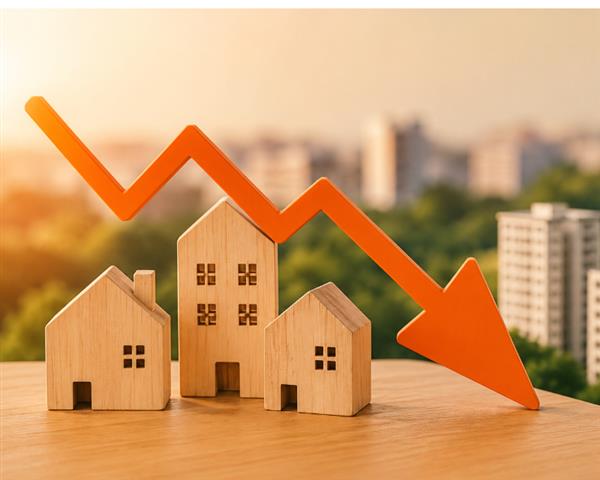
The Q4 2020 RE/MAX National Housing Report reveal that, for the fourth consecutive quarter, the median asking price of sectional titles have dropped YoY, shrinking by 3% when compared to Q4 2019. The average active listing price on remax.co.za also dropped by 13% YoY. The only segment the showed growth was the median asking price of freehold properties which grew by 5% YoY.
“Although the property market is very much active at this time, many buyers and sellers are struggling to make ends meet within the current economy, which puts downward pressure on asking prices. An interest rate cut could have helped alleviate some of this financial pressure, allowing room for property prices to strengthen,” Goslett explains.
While it is unlikely that we shall see interest rates climb this year, Goslett still advises homeowners to leave room in their budget for a possible increase of around 0.5 points during the course of 2021.
“While it is possible that interest rates may drop further during the course of the year in response to the ever-evolving circumstances surrounding the pandemic, it is always advisable for homeowners to make provision for the possibility of a minor increase, as this will directly affect the repayments on their home loan,” he recommends.
Goslett also encourages buyers to enter the property market while interest rates are at this record-breaking low. “It remains unlikely that interest rates will return to their previous levels of around 10% within the near future. I therefore encourage buyers to make the most of the current market conditions before things change,” he concludes.
Interest rate disappoints as second wave could eat into property and economic gains, says Seeff
The decision by the South African Reserve Bank (SARB) to retain the repo rate at 3.5% (home loan base rate at 7%) is disappointing for the economy and property market, says Samuel Seeff, chairman of the Seeff Property Group.
There is ample reason for a cut given the split decision and missed opportunity in November. Since then, the Rand has strengthened and inflation dipped to 3.1%, the lowest in 16 years. Although expected to rise, analysts believe it will remain below the midpoint of 4.5% providing enough reason for a rate cut.
We have seen what last year’s rate cuts did for the economy and property market with better than expected results during the second half of 2020, says Seeff. While the property market is poised to continue its buoyancy, we now again find ourselves with tighter lockdown restrictions amid a second wave resurgence of the Covid Pandemic.
The risk of the Reserve Bank not taking the opportunity to provide a stimulus is that the economic impact on employment and household finances could start eating into the gains made last year. While we have not seen the anticipated levels of distressed sales, Seeff says the longer the Covid Pandemic lingers, the higher the risk.
We entered December with a buoyant market, predominantly in the low and mid-price sectors to R1.8 million (R3 million in some areas). Even the top end saw good movement in the R10 million to R20 million range towards late 2020 with Seeff’s scooping several sales above R20 million in December.
Characteristically, the market tapered down at year-end. While too early to tell whether we will see the same level of buoyancy this year, the Seeff Group remains upbeat provided the interest rate remains favourable and economy can reopen fully soon.
Ultimately, says Seeff, government needs to get on with a vaccination programme with some urgency to limit the economic fall-out from the lockdown. The longer it lingers, the higher the risk of rising inflation and distressed properties which could lead to tighter bank lending criteria and higher deposit requirements. This would inevitably impact on activity in the low and mid-price ranges.
Nonetheless, we enter 2021 with a great buyer’s market, especially in the low to mid-market areas to R1.8 million (R3 million in some areas) and selectively in the upper price bands and sellers should be able to find interested buyers provided they price correctly.