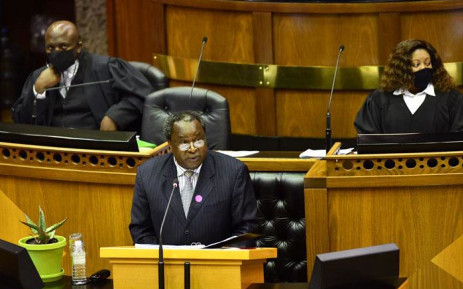
The National Budget Speech for 2021 was delivered today by Finance Minister Tito Mboweni, we take a look at the response from the property market
Budget speech to impact the property market indirectly
Despite there being no announcements that directly affect the local property market, the National Budget Speech for 2021 will have an indirect impact on the local real estate market over the course of this year.
“The property market is indirectly affected by the overall performance of the economy. Leading up to the speech, I therefore remained hopeful that the budget will be allocated wisely and in such a way as to facilitate job creation and economic recovery. While some of what was promised can help towards stimulating growth, thereby positively impacting the local property market, other decisions fell short and are unlikely to achieve their desired outcomes,” says Regional Director and CEO of RE/MAX of Southern Africa, Adrian Goslett.
For example, Goslett says that the increasing of the personal income tax brackets / thresholds will help lower- to middle-income earners which will hopefully provide access to greater disposable income. However, the lowering of the corporate tax rate to 27% is unlikely to stimulate reinvestment or employment as it is not an aggressive enough stance. “I would also have liked to have seen more creativity around possible support or tax breaks for entrepreneurs and / or small to medium enterprise owners,” he comments.
Goslett is also unconvinced by the growth forecast predicted in this speech. “In previous years, there have been promises of a 3.3% growth but we have not hit that target for years. There is much ground to make up for the lack of growth over the previous years and based on the lack of available revenue to invest, it seems unlikely that we will see that growth rate happening in the year ahead,” he suggests.
“With the massive tax shortfall for 2020 and the enormous debt that SA will have to service going forward, there is not much room for stimulation. While I am glad to hear that there are no further bailouts for other state-owned enterprises, we are still paying for the sins of wasteful expenditure and corruption in prior years. It would have been tough without that waste. Now it is a mountain to climb,” he concludes.
“Positive budget” welcome news for homeowners and consumers, says Seeff
Finance Minister, Tito Mboweni presented a “positive budget” under challenging circumstances, perhaps the most challenging over the last twenty seven years, says Samuel Seeff, chairman of the Seeff Property Group.
Seeff welcomes the focus on economic recovery, relief for households, vaccination and the various reforms proposed including in corporate tax, the public sector wage bill and State Owned Enterprises.
We are delighted that instead of facing tax hikes, Treasury is providing tax relief in the form of a 5% adjustment in the personal income tax brackets which should bring relief for low to middle income earners especially, says Seeff.
A missed opportunity is perhaps that transfer duty, including the R1 million exemption threshold remains unchanged. Some relief here, especially at the higher end where transfer duty was increased three years ago could have gone a long way in driving higher sales in the property market and in turn higher transfer duty revenue and economic contribution.
While Capital Gains Tax and VAT remains unchanged, consumers and household budgets will need to absorb increases such as the 15.63% electricity hike from the 1st of April along with a 26c per litre increase in the fuel levy which will affect their cost of living and eat into household budgets and will offset some of the personal tax savings provided.
Other positive aspects of the budget include the significant focus on job creation with an overall allocation of nearly R100bn which includes an infrastructure budget as well as short-term job creation initiatives across various departments. The increases in the pensions and social grants are also welcome news for the economy.
The minister further noted that South Africa’s economy is expected to rebound by 3.3% following a 7.2% contraction in 2020. Global growth is expected at 5,5% spurred by vaccine roll-outs, China at 8.1%, India at 11.5% and SADC at 3.2%
Given that the latest inflation rate of 3.2% as at January is still well within the Reserve Bank’s target range, Seeff says the outlook for the interest rate remains positive and property buyers can still take advantage of the five-decade low borrowing costs.
It remains one of the best times ever to buy property and Seeff expects the market outlook to remain positive based on current conditions. As we have seen over the last year, the bulk of the activity will be below R1,5 million and up to R3 million in the high end areas.
The bank lending climate remains favourable for qualifying homebuyers but sellers on the other hand will need to continue pricing competitively.
Relief at no increase in personal tax
Says Dr Andrew Golding, chief executive of the Pam Golding Property group:
“Apart from the commitment made to the urgent rollout of the vaccination programme, of comfort to debt-burdened consumers is the announcement in the National Budget today that there will be no increase in personal income tax, but instead, a 5% adjustment in the personal income tax brackets which will combat fiscal drag and provide R2.2 billion in tax relief – targeting lower and middle-income households.
In addition, good news for businesses is that the corporate income tax rate will be lowered to 27% for those with years of assessment from 1 April 2022.
Most important from a property perspective is what the Budget will do to address obstacles to economic growth and to boost business and consumer confidence. Tax relief for both individuals and businesses will provide a boost to confidence levels – particularly as possibly significant tax increases were predicted as possible, by some commentators. Government’s ongoing commitment to fiscal consolidation should also be well received by the ratings agencies and investors.
Firstly, in this regard, we welcome the prioritisation of establishment of a Tourism Equity Fund to help support recovery of the tourism sector, which is a significant contributor to GDP and which has together with the hospitality industry in general, borne the brunt of the sustained Covid-19 lockdown.
We also look forward to seeing the stabilisation of government debt, and acceleration in the implementation of long-overdue structural reforms aimed at boosting investment in the economy to lift growth and create jobs, which is essentially the only sustainable long-term solution.
SMME’s in turn will also be appreciative of any initiatives to lower barriers to entry and help lower the cost of doing business. A further positive is the allocation of R4 billion by the Department of Small Business Development for township and rural enterprises.
Of importance is investment in infrastructural improvements – a factor which in turn has a direct impact on housing market sentiment - and it is hoped that the R791.2 billion allocated to infrastructure investment will be swiftly put to good use, not only in terms of roads, bridges and dams but in particular the pressing need to get our country’s rail operation network repaired and fully up and running once more. Without effective transport networks, industry and individuals alike are negatively impacted, as is our economy.
However, on the back a recent fuel price hike, a further fuel levy increase of 27c per litre will act as an additional financial burden on the economy.
While the residential property market has in recent months rebounded to some degree, consumers remain under economic pressure and it is hoped that initiatives taken by government in the near future will help offset the ongoing economic impact of the Covid lockdown.
On balance the Budget is welcomed with tax relief and further fiscal consolidation. This should go some way towards boosting economic growth. But much of the progress in stabilising debt depends on upwardly revised growth forecasts materialising. As the Treasury itself notes ‘the outlook remains highly uncertain and the economic effect of the pandemic are far-reaching’.”
A constrained economy exacerbates growing unemployment
Finance Minister Tito Mboweni’s 2021 national budget has been delivered against the backdrop of a significant economic contraction in the second quarter of 2020, rising debt to GDP and many South Africans that are in a weakened financial position.
“Significantly, he confirmed that we are spending more than we are collecting from less people,” points out Michelle Dickens, CEO of TPN Credit Bureau.
According to unemployment figures released by Stats SA, 2.2 million people lost their jobs in the second quarter of 2020. Despite a recovery, South Africa is still short of 1.3 million jobs from the start of the year compared to the end of the year. The country’s current unemployment rate of 32.5% is the highest on record. In the expanded definition, this figure is even higher at 42.5%.
South Africa recorded its largest tax shortfall on record in the past year, collecting R213 billion less than anticipated in the 2020/21 budget. This shortfall will necessitate additional government borrowing of R500 billion per year for the medium term, which means our gross loan debt will increase from R3.95 trillion currently to R5.2 trillion in 2023/24.
Encouragingly there was no change made to the VAT rate, the corporate income tax rate will be lowered to 27% in April 2022 and the personal income tax brackets will be increased by 5% which will provide some tax relief to lower and middle income households. As expected, the excise and fuel levies have been increased, as have sin taxes.
“South Africans are already subject to a very high tax rate, paying tax rates that are more commonly found in developed nations, so it was little surprise that government put a hold on the R40 billion tax increase announced in October last year,” says Dickens.
“There is no question that in the wake of Covid-19 and a contracting economy, consumers are feeling the pinch,” she says, adding that personal finances will be further stretched by the looming 15% Eskom tariff hike.
“One reflection of this is the fact that despite historically low interest rates currently, tenants are not rushing out to buy their own homes because they are unable to afford it. According to the TPN Tenant Survey affordability has become one of the most significant barriers to entry to property ownership,” says Dickens.
The survey revealed that nearly 10% of tenants lost their income permanently during lockdown, 12% lost their income temporarily and only 25% received their full pay. “Given the high unemployment figures we can expect to see a growing number of people this year moving back in with friends or family rather than owning their own property or renting a property,” predicts Dickens.
According to the survey, money, paying the rent, funding the deposit and a lack of control over the cost of utilities – energy in particular – fall in the top four challenges faced by tenants.
“Not only is the economy under pressure, but so are jobs and incomes,” says Dickens. “This has a knock on effect on the property market which is also under pressure. In the rental market in particular, reduced demand for property translates into higher vacancies and ultimately, lower prices.”
While she is encouraged by the budget’s R11 billion allocation to the Presidential Youth Employment Initiative – which takes government funding for employment creation to nearly R100 billion – Dickens questions whether this is effective.
“Within the expanded definition, youth unemployment is at 74%,” she points out, adding that the only way to address this challenge is to grow the economy in order to create more jobs. Economic growth, however, relies on an investment into capacity building projects and South Africa has limited fiscal space to achieve this in the current environment.
Herschel Jawitz, CEO of Jawitz Properties, says that the 2021 Budget has offered some surprising upsides given the poor state of the country’s finances and the impact of COVID-19 on the economy. “As expected, there was no further direct relief with regard to the purchase of residential property with the transfer duty exemption threshold remaining at R1 million and no changes to the Capital Gains Tax threshold. What was noted in the details was that income from property taxes was expected to be flat from last year, but is expected to grow by R1,4 billion to R16,8 billion in the 2021/22 year. The numbers relative to the overall budget are small and perhaps more residential transfer duty relief would be more than offset by increases in home ownership.
“What was really surprising was the above-inflationary increase in the personal income tax brackets, which together with a sustained low interest rate environment, will provide additional relief to consumers and homeowners. The financial impact may not directly impact on residential demand or prices but it may lift consumer confidence just a bit, which is a key driver for the residential market. Similarly, the proposed reduction in corporate taxes may help to stop the slide in business confidence, which is critical to get businesses to spend and the economy to grow.”
Jawitz says that the numbers around economic growth are concerning and questions whether the budget will do enough to drive the economy to levels that create sustainable jobs, raise income levels and uplift the country as a whole. “Predicted GDP growth of 2,2% in 2022 and 1,6% in 2023 are simply not going to do the job. For property prices to grow in real terms, demand will have to exceed supply on a consistent basis. This will only be reflected when more people earn more money and that’s about economic growth,” concludes Jawitz.
High Street Auctions Director Joff van Reenen expressed disappointment in the national budget delivered in Parliament, saying the government lost a valuable opportunity to show citizens and foreign investors that it had feasible plans to affect an economic turnaround.
“We have record unemployment figures and job losses in the private sector coupled with a massively bloated public sector that has a wage bill to match, and the most tangible solution from the government in this budget is sinking another R12.6 billion into creating temporary jobs that offer nothing in the way of long-term sustainability.
“This while we will be servicing a combined debt rising to nearly R6 trillion in the next three years with interest payments to bondholders and other lenders of R269bn this financial year, rising to R338.6bn in the 2023/24 financial year. It’s a joke, and everyone not on the government payroll is the laughing stock.”
Van Reenen says before delivering the budget Tito Mboweni would have done well to heed the contents of the latest Ipsos report on issues plaguing countries across the globe.
“Ipsos asked around 20 000 adults in 27 countries about 18 points of stress in their What Worries the World Report that came out a few days ago.
“Respondents had to select three topics out of the listed 18 that they were the most worried about, and South Africa was the only country in the world in which Covid didn’t even make that shortlist.
“Top of the list in this country with a whopping 59% was dire concern about unemployment and corruption. This was followed by crime (58%) and poverty and social inequality (29%). Covid-19 came next at a comparatively measly 24%.
“The government needs to start listening to its people and offering more than sticking plasters to cover holes in the disintegrating dam wall that is our national economy.
“Don’t pretend to ‘give’ tax breaks to low-income households, then snatch the money straight back with massive cost-of-living hikes that will invariably follow a big increase in the fuel levy.
“Be honest and cut back where it matters, like banning further bailouts of poorly managed State Owned Enterprises and paying more than lip service to rampant corruption. Global investors aren’t fooled by panaceas, and neither are the citizens of this country.”
Yael Geffen, CEO of Lew Geffen Sotheby’s International Realty, welcomed the government backtracking in this budget speech on its earlier decision to increase personal income tax, as well as providing a further R2.2 billion in tax relief through raising personal income tax brackets and rebates by 5%.
“One can’t help feeling, though, that this budget was more about smoke and mirrors than about offering any real economic solutions.
“On the one hand the government is giving back to lower income households with personal tax breaks, but a hefty rise in the fuel levy will force cost-of-living increases across the board that will negate those benefits and cost everyone more.
The minister also had expressed strong views on the need to cut the country’s massively bloated public wage bill, but at the same time ploughed R12.6bn into the creation of short-term jobs that offer no long-term benefit to the economy.
“In fact, all they do is temporarily skew the official unemployment statistics in the government’s favour, give foreign investors and ratings agencies a false picture of the economic stability of the country and offer no long term benefit to the citizens on the ground who really need sustainable jobs.”
Geffen says the property industry stands with the rest of the private sector in seeking a concrete road map from government that will slash public spending, pay more than lip service to rampant corruption and get the country out of debt.
“We’re servicing a R3.95 trillion debt that will grow to R5.9 trillion within three years, with the interest alone running to hundreds of billions
“At the end of the day this was a populist budget that looks shiny on the surface, but does not actually put South Africa back on a path to economic recovery. This country and its people deserve better from our leaders.”